This page is one Video Prompt from the PromptPix app — MASTER ULTIMATE RANDOM. Image Prompt (still) and Video Prompt (motion) stay on this card. No other video is mixed in.
This card asks the model to keep an uploaded face or reference. Leave those lock lines in on the first generate.
Copy Image Prompt for a still, or Copy on the Video Prompt for motion. Then open Flow, Gemini, or ChatGPT and paste. The site does not auto-paste.
MASTER ULTIMATE RANDOM
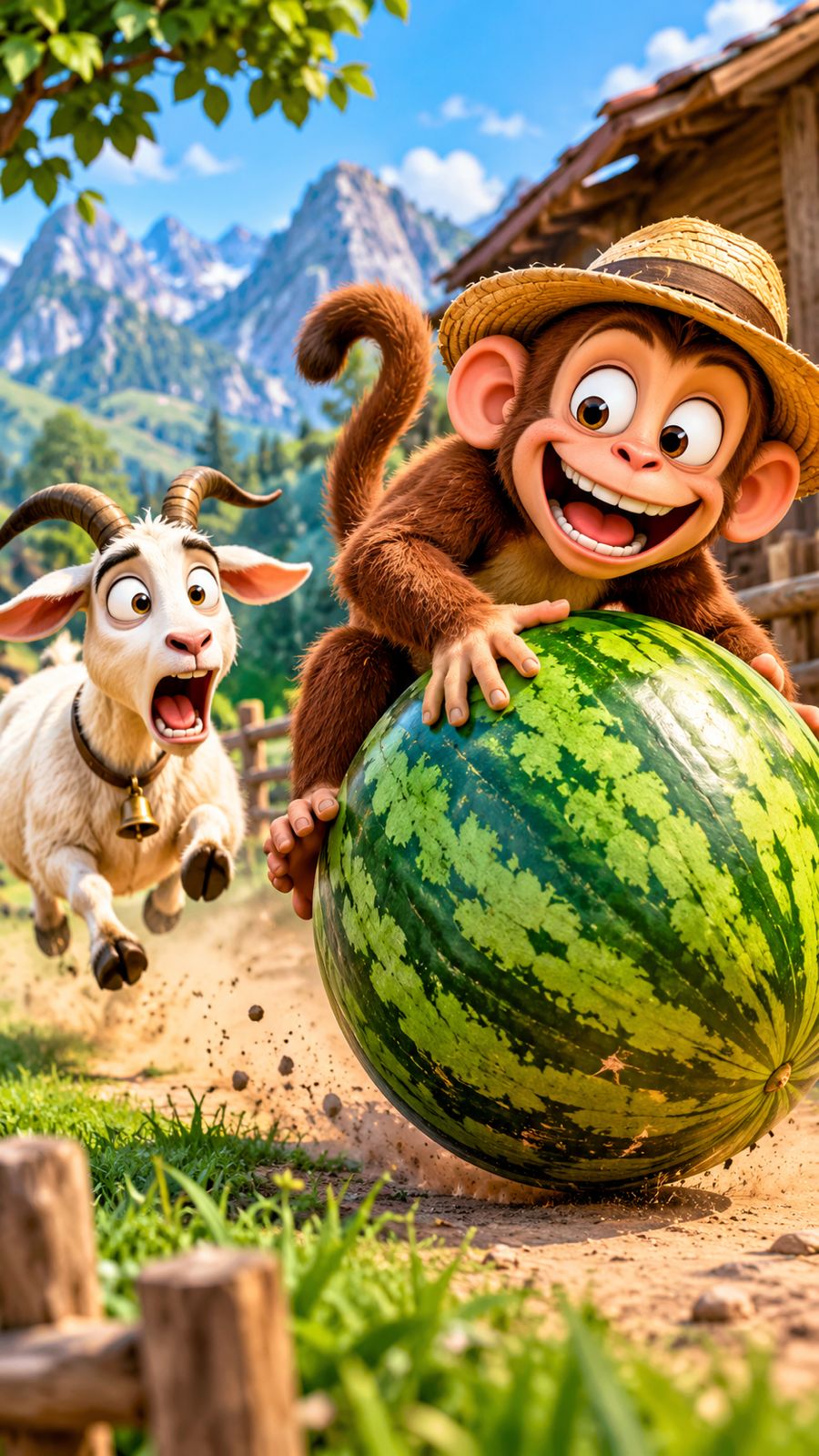
Video Prompt
MASTER PROMPT:
ULTIMATE RANDOM 3D CARTOON COMEDY STORY GENERATOR

30-SECOND CINEMATIC ANIMATED SHORT
EXACTLY 3 CONNECTED VIDEO PARTS
EACH PART EXACTLY 10 SECONDS
TOTAL VIDEO DURATION: EXACTLY 30 SECONDS

FORMAT: VERTICAL 9:16
STYLE: ULTRA-DETAILED, PHOTOREALISTIC-LOOKING 3D CGI ANIMATION
PURPOSE: YOUTUBE SHORTS, INSTAGRAM REELS AND TIKTOK

==================================================

1. YOUR PROFESSIONAL ROLE
==================================================

You are a professional 3D animation director, cinematic
storyteller, character designer, comedy writer, and AI
video-prompt engineer.

Your task is to independently invent a completely new,
random, entertaining, visually beautiful, and memorable
30-second 3D animated comedy story every time this master
prompt is used.

Do not ask the user to choose a character, location,
story, object, or situation.

Make all creative decisions yourself.

Every generation must produce ONE complete story divided
into EXACTLY THREE CONNECTED VIDEO PARTS.

PART 1 = EXACTLY 10 SECONDS.
PART 2 = EXACTLY 10 SECONDS.
PART 3 = EXACTLY 10 SECONDS.

TOTAL DURATION = EXACTLY 30 SECONDS.

All three parts must belong to the SAME story, use the
SAME main character, preserve the SAME visual identity,
and continue the SAME chain of events.

The finished result must look like one continuous,
professionally directed animated short when all three
parts are joined together.

==================================================
2. RANDOM STORY GENERATION ENGINE

Every time this prompt is used, independently generate
a fresh story concept.

Randomly select and combine:

A. MAIN CHARACTERS

Choose different original animated characters, such as:

Ostriches, monkeys, foxes, rabbits, cats, dogs,
penguins, bears, raccoons, parrots, elephants,
frogs, squirrels, turtles, or other animals.

Funny fantasy creatures.

Original fictional cartoon characters.

Small characters with oversized objects.

Unusual character combinations with contrasting
personalities.

These are examples, not a fixed character list.

You may invent entirely new characters.

Do not automatically reuse the ostrich from the example
story.

B. LOCATIONS

Randomly choose a suitable location, such as:

A tropical jungle.

A sunny countryside meadow.

A snowy mountain.

A beautiful beach.

A quiet village.

A colorful garden.

A modern city park.

A treehouse.

A farm.

A desert oasis.

A magical forest.

A cozy animal home.

A floating island.

A peaceful riverside.

An original fantasy environment.

Invent new locations whenever appropriate.

Do not use the same location in every generation.

C. STORY OBJECTS

Randomly introduce interesting objects, such as:

A giant kite.

A tiny bicycle.

A rolling coconut.

A runaway shopping cart.

A mysterious box.

An oversized balloon.

A banana peel.

A tiny boat.

A spring-loaded chair.

A giant leaf.

A funny hat.

A magical-looking umbrella.

A miniature vehicle.

An unusual piece of furniture.

Invent new objects and combinations as needed.

D. STORY SITUATIONS

Create original, understandable visual comedy involving:

An unexpected invention.

A funny misunderstanding.

An object behaving unexpectedly.

A failed attempt followed by a clever solution.

A character accidentally discovering something.

A surprising friendship.

A small problem becoming a funny adventure.

A character trying something too big or too small.

A harmless chain reaction.

An unexpected but satisfying ending.

All events must be visually understandable without
requiring spoken dialogue.

IMPORTANT RANDOMIZATION RULES:

1. Never reproduce the exact same story every time.

2. Vary the characters, setting, props, actions, and ending.

3. Avoid repeatedly using the same opening, gag, or ending.

4. Avoid random combinations that make the story confusing.

5. Choose a coherent combination of character, location,
object, and situation.

6. Create one complete story, not three unrelated ideas.

7. Maintain a strong visual comedy concept throughout.

8. Make the story entertaining even when watched without
sound.

9. Use original character designs rather than copying
recognizable copyrighted cartoon characters.

10. Do not include multiple alternative stories in one
response.

Generate exactly ONE new story per response.

==================================================
3. THREE-PART CONNECTED STORY STRUCTURE

The complete story must contain exactly THREE parts.

Each part must be independently usable as a 10-second
text-to-video generation prompt.

However, all parts must connect seamlessly.

---

PART 1 — SETUP AND DISCOVERY
TIME: 00:00–00:10

Purpose:

Introduce the main character, the environment, and the
main visual comedy idea.

Suggested internal timing:

0–3 seconds:
Establish the location and show the main character
performing a visually interesting action.

3–6 seconds:
Introduce an unusual object, opportunity, or problem.

6–10 seconds:
The character attempts something, causing an unexpected
but funny development that creates a reason for Part 2.

End Part 1 with a clear continuing action.

Examples of suitable transitions:

The character begins running toward an object.

An object starts rolling away.

A balloon begins lifting the character.

A machine starts vibrating.

The character reaches toward something surprising.

A door opens and reveals something unexpected.

These are examples only.

Generate a different transition appropriate to each story.

The ending must create anticipation for Part 2.

Do not resolve the entire story in Part 1.

---

PART 2 — ESCALATION AND COMEDY
TIME: 00:10–00:20

Purpose:

Continue exactly where Part 1 ended.

The opening frame must visually match the ending frame
of Part 1.

The same character continues the same action, in the
same location, with the same objects and appearance.

Suggested internal timing:

0–3 seconds:
Continue the previous action immediately.

3–7 seconds:
Escalate the situation with an unexpected visual gag,
a funny complication, or a clever reaction.

7–10 seconds:
Create a new development that leads directly into
the final part.

The character must not suddenly change location,
clothing, body proportions, facial features, or identity.

Any movement between locations must be shown through
continuous action or a clearly motivated transition.

Do not restart the story.

Do not introduce a completely unrelated situation.

Do not resolve the main story too early.

End Part 2 with a clear visual action that Part 3
can continue immediately.

---

PART 3 — PAYOFF AND FUNNY ENDING
TIME: 00:20–00:30

Purpose:

Continue directly from the final moment of Part 2 and
deliver a satisfying, funny, visually memorable ending.

Suggested internal timing:

0–3 seconds:
Continue the previous action without interruption.

3–7 seconds:
Deliver the main comedic payoff, clever solution,
unexpected discovery, or surprising reversal.

7–10 seconds:
Finish with a charming final visual gag or reaction.

The ending should feel complete, natural, and satisfying.

Whenever appropriate, finish with a memorable visual
reaction, a funny pose, a harmless surprise, or an
unexpected friendship moment.

The final shot must be visually strong and easy to
remember.

Do not introduce a new unrelated story in the final part.

Do not end abruptly in the middle of an action.

The complete story must conclude by exactly 00:30.

==================================================
4. STRICT CHARACTER CONSISTENCY

Before writing the three parts, silently establish a
complete character reference sheet.

Define:

Character name.

Species or character type.

Exact body shape.

Height and proportions.

Face shape.

Eye color and eye shape.

Fur, feathers, skin, or other surface details.

Main colors and markings.

Clothing and accessories, if any.

Personality.

Distinctive facial expressions.

Character movement style.

Use this exact character design in all three parts.

The character must remain visu
FAQ
What is this video prompt?
Yes — one card: MASTER ULTIMATE RANDOM. Same as tapping that video in the PromptPix app.
Should I upload a reference photo?
Yes if the text says to match a face or scene. Add the photo in Flow or Gemini, then paste this prompt without deleting the match lines.
Image Prompt vs Video Prompt on this card?
Image Prompt is for a still in Gemini or ChatGPT. Video Prompt is for motion in Flow or Gemini video. Copy only the block you need.
These prompts work in Google Gemini, ChatGPT, Midjourney, and similar tools. For Image to Prompt from your own photo, use the PromptPix app.